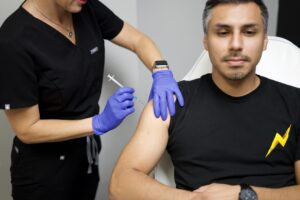
If you have scrolled through TikTok or Instagram lately, you have likely encountered the word “peptides.” They are trending everywhere—from influencers promoting “glass skin” serums to fitness enthusiasts discussing “miracle” recovery injections, and the global conversation surrounding weight loss shots.
This viral explosion has generated a wave of curiosity, but also confusion. What exactly are they? Are they safe? How do you use them, and where do you actually get them?
At Infinity Premier Health, we believe it is crucial to separate viral trends from clinical reality. While social media often frames peptides as magic wands, the science reveals something far more interesting: they are sophisticated biological tools.
Decoding the Trend: What Are They and What Do They Do?
To understand why peptides are trending, you must understand their biological function. Technically, peptides are short chains of amino acids—the same building blocks that make up proteins. However, unlike large, complex proteins, peptides are smaller and have higher bioavailability, meaning the body can absorb and utilize them rapidly.
Think of peptides as the body’s internal “text messages.” They are signaling molecules. They don’t just sit there; they travel to specific cells and bind to receptors, delivering precise instructions.
The reason they are viral on platforms like TikTok is that they address the three most desirable aspects of human optimization:
-
The “Glow Up” (Dermatology): Signaling skin to repair itself.
-
The “Ozempic Effect” (Metabolism): Signaling the brain to feel full and the body to regulate sugar.
-
The “Biohack” (Performance): Signaling tissues to heal injuries faster than nature intended.
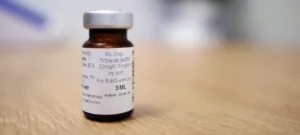
bottle of peptide
Types of Peptides and How They Function
One of the most common questions is, “Which peptide do I take?” The answer depends entirely on the signal you want to send. In clinical practice, we categorize them by their mechanism of action:
Metabolic Agonists (GLP-1s) This is the most famous category currently. Drugs like Semaglutide (Ozempic/Wegovy) utilize peptides that mimic the hormone glucagon-like peptide-1. They function by slowing gastric emptying and signaling satiety to the hypothalamus. They are not merely “weight loss hacks” as described online; they are powerful metabolic regulators for insulin resistance.
Secretagogues (Growth Hormone Modulators) In the fitness community, you will hear names like Ipamorelin or CJC-1295. These are “secretagogues,” meaning they do not inject hormones into you; rather, they signal your pituitary gland to secrete your own Human Growth Hormone (HGH) in a natural, pulsatile rhythm. This aids in muscle retention and fat metabolism without the heavy side effects of synthetic HGH.
Reparative & Signal Peptides (BPC-157 & GHK-Cu)
-
BPC-157 (Body Protection Compound): Often discussed in gym circles, this peptide is derived from a protein in the stomach and is used to reduce inflammation and promote angiogenesis (new blood vessel formation) to heal tendons and ligaments.
-
GHK-Cu (Copper Peptide): A staple in “anti-aging” skincare, this peptide signals the removal of damaged collagen and stimulates the production of new structural proteins, improving skin elasticity.
The Safety Gap: How to Use Them and Where to Buy
This is where the “TikTok University” advice often becomes dangerous. A common query is “Where can I buy peptides?“
Many users are directed to “research chemical” websites that sell vials labeled “Not for Human Consumption.” While these are easily accessible, they are unregulated, often containing fillers, incorrect dosages, or impurities.
How are they used?
Administration varies by type. Skincare peptides are topical (creams/serums). However, most systemic peptides (like BPC-157 or GLP-1s) require subcutaneous injection using insulin needles to bypass digestion and enter the bloodstream effectively. Some newer formulations are available in oral capsules, but their absorption rates differ.
The Clinical Reality
Peptides are not supplements to be experimented with lightly. Because they act on powerful signaling pathways—controlling hunger, growth, and tissue repair—they require medical supervision.
At Infinity Premier Health, we emphasize that peptides are not a “one-size-fits-all” trend. They are precision medicine. Whether the goal is aesthetic rejuvenation, metabolic correction, or injury recovery, the protocol must be tailored to your unique physiology to ensure safety and efficacy.